01
Begin with the household, not the sample board
Porcelain tile flooring should be chosen for the way a Sarasota home is actually used. Start by listing the rooms, who walks through them, whether pets or children live there, and how often doors open toward a pool, lanai or sandy entry. A lightly used guest room presents different demands from a kitchen path that connects the garage, refrigerator and patio. Note where bare feet are common, where water may be carried indoors and where chairs or rolling furniture move. These observations create a useful performance brief before color, pattern or size begins to influence the decision.
Next, describe the maintenance routine the household will realistically follow. Some owners want a forgiving matte surface that disguises dust between cleanings, while others accept more frequent attention for a polished appearance. Seasonal residents may prioritize an uncomplicated restart after the home has been closed, and an occupied family may care more about quick daily cleanup. Bring this information to product comparisons and ask how each candidate behaves under those conditions. The most successful selection is not automatically the most expensive or dramatic tile; it is the one whose appearance, traction and care expectations fit normal life.
02
Read the product information behind the word porcelain
Porcelain describes a category, not a single level of finish or performance. Products can differ in surface treatment, body color, edge machining, dimensional consistency, thickness and intended applications. A showroom label or online photograph cannot communicate all of that information. Request the current technical sheet for a tile being seriously considered and confirm that the manufacturer identifies it for the proposed interior floor location. Review the stated finish, nominal and actual dimensions, shade variation, recommended joint guidance and care instructions. When information is unclear, pause the selection rather than assuming that one porcelain tile performs like another.
Glazed, unglazed, color-body and through-body descriptions are also easy to oversimplify. They affect appearance and how an exposed chip may look, but none replaces a complete review of the specific product. Ask to see a loose piece from the side as well as the face, then view several pieces together under the home’s likely lighting. If a salesperson mentions a rating or test result, ask what it measures and how it applies to the intended room. Documented suitability is more useful than a broad claim such as commercial grade, stain proof or maintenance free.
03
Balance traction, texture and cleanability
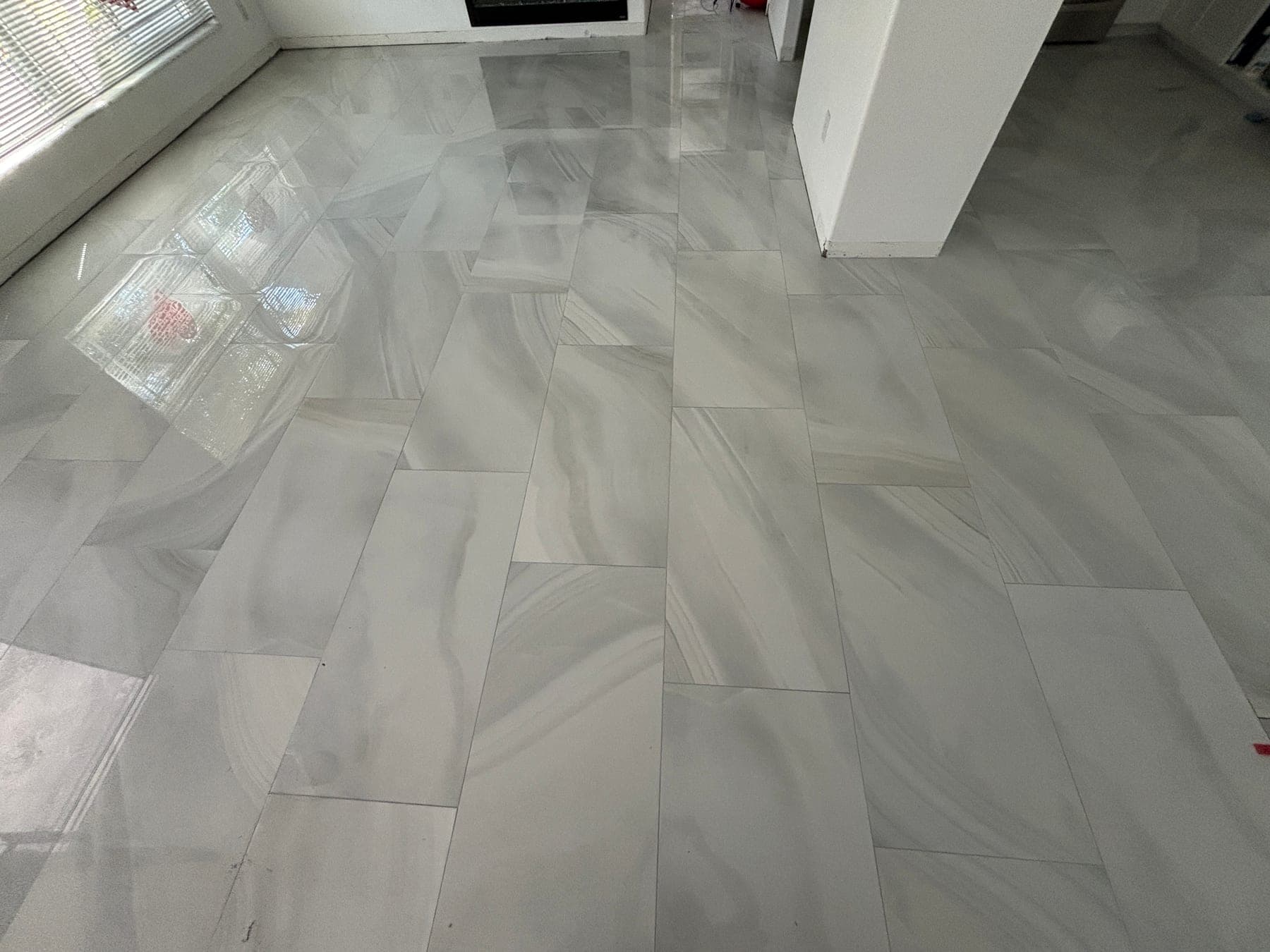
Surface finish influences both feel and upkeep. A highly textured tile may provide useful grip in an entry but hold soil more noticeably than a smoother option. A polished surface can create visual depth yet show water spots, footprints or fine abrasion more readily in certain light. Matte does not automatically mean slip resistant, and glossy does not describe every practical limitation. Compare manufacturer information for the exact finish and intended use, then handle a full sample with dry and slightly damp hands. For bathrooms and doorways, evaluate predictable water exposure instead of relying on a single descriptive word.
Cleaning expectations should be tested before a whole floor is ordered. Take a sample home and place it near the room for several days. Look at it in morning and afternoon light, walk on it with typical footwear, and wipe it using a manufacturer-compatible cleaner. A deeply embossed stone or wood texture may require a brush or different mop technique, while a uniform dark surface may reveal pale dust quickly. Sarasota sand can behave like an abrasive when dragged under shoes, so entry mats and dry soil removal matter regardless of finish. Selection and care planning belong in the same conversation.
04
Choose format and visual variation deliberately
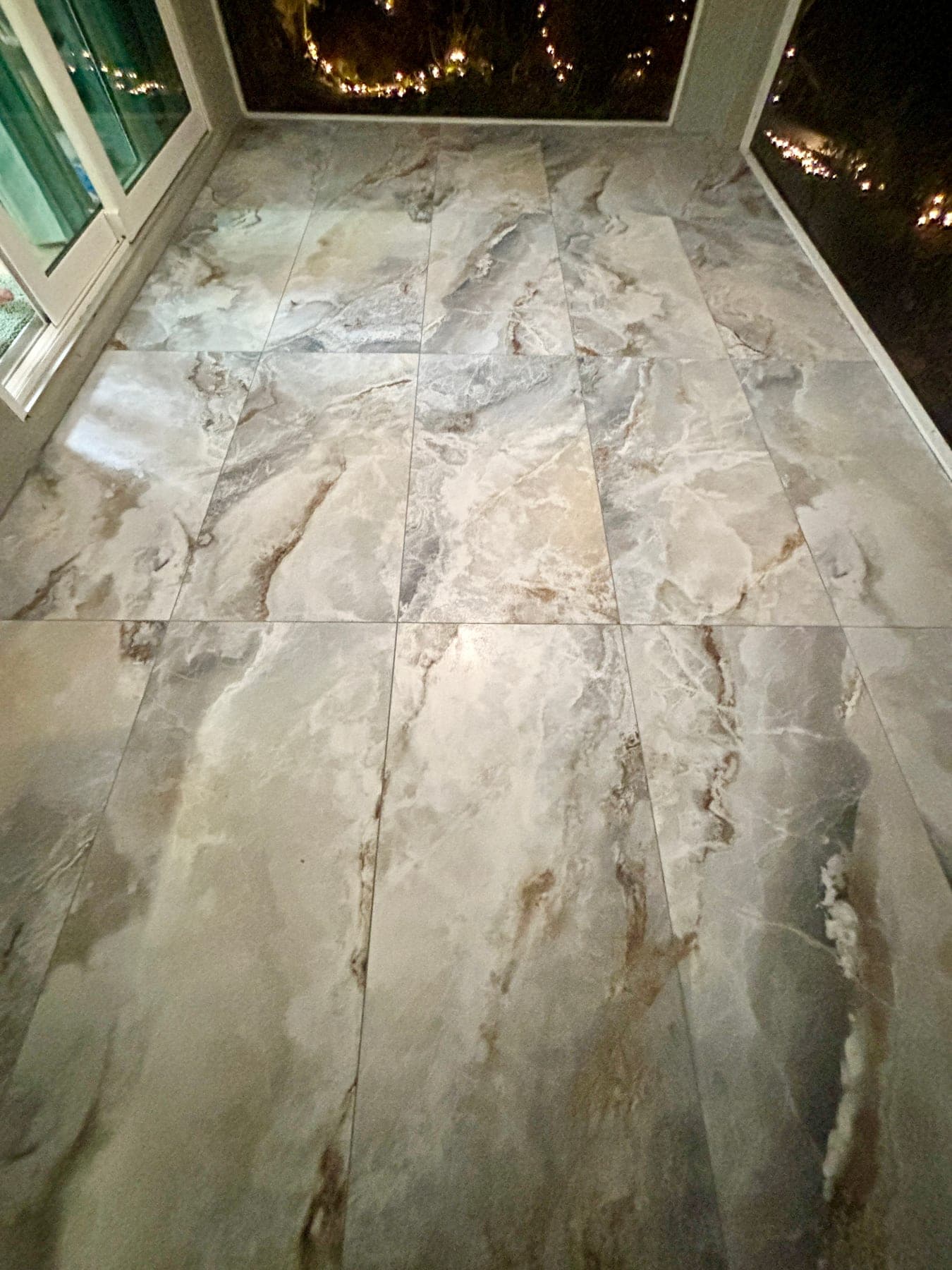
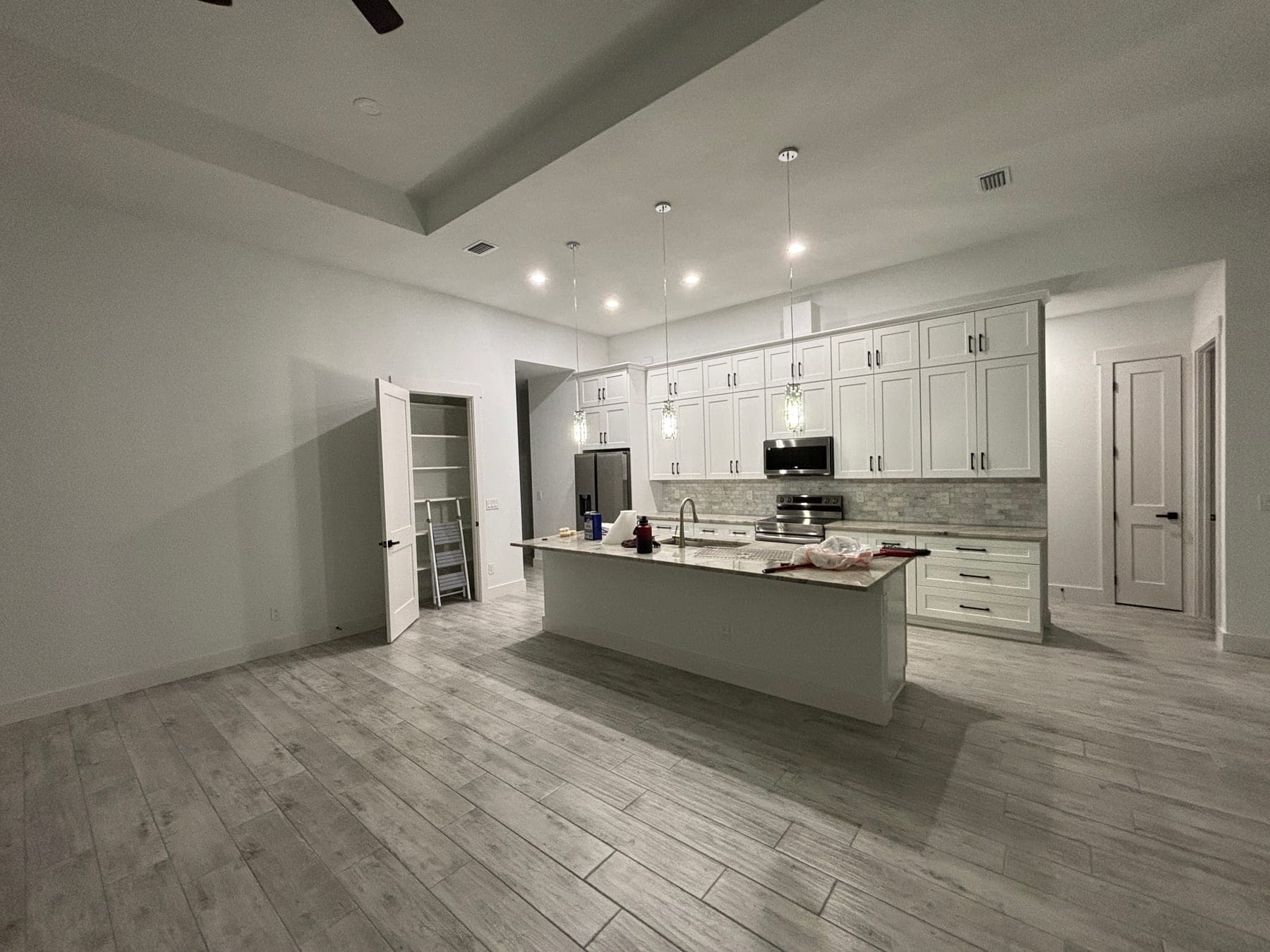
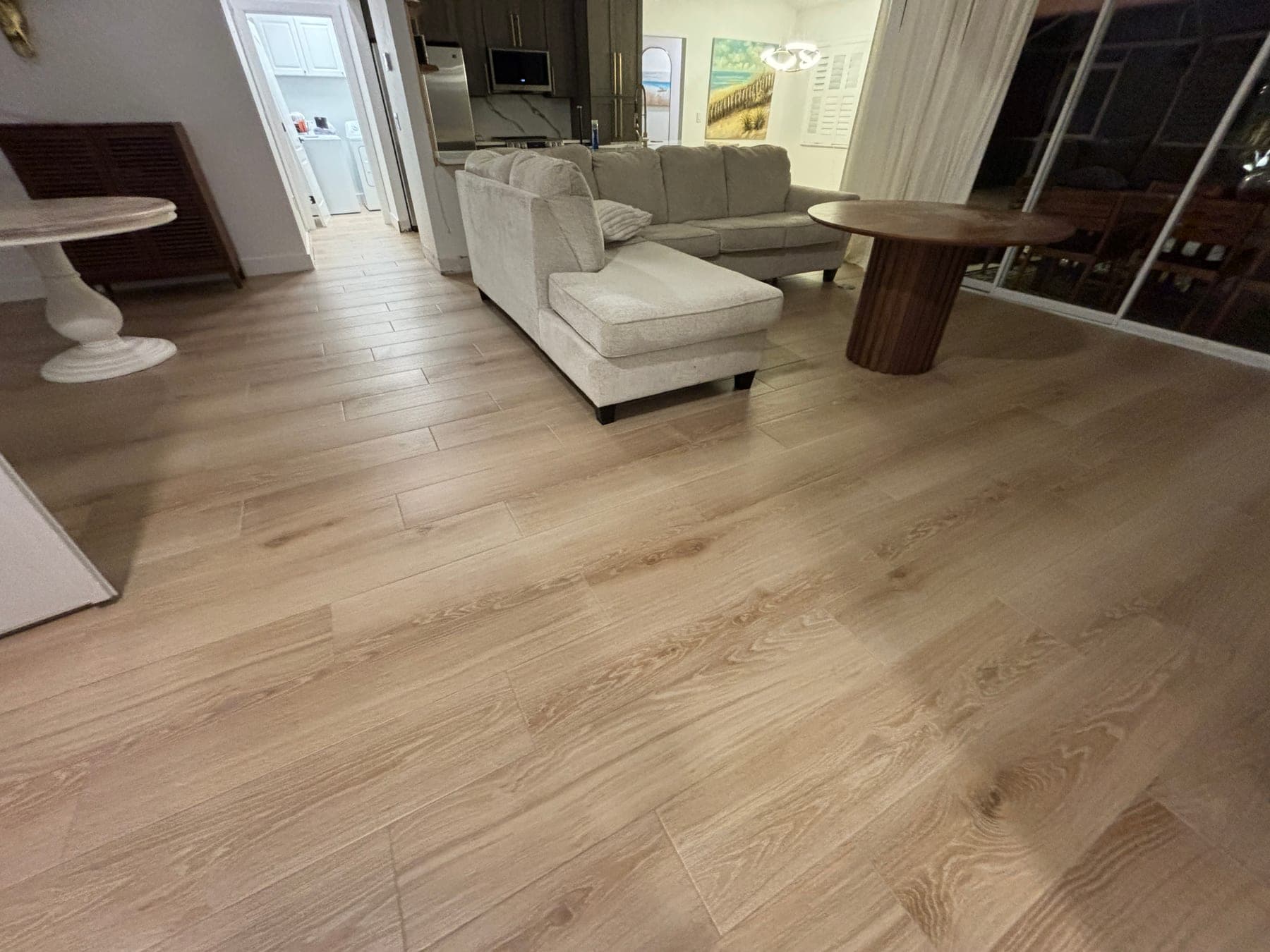
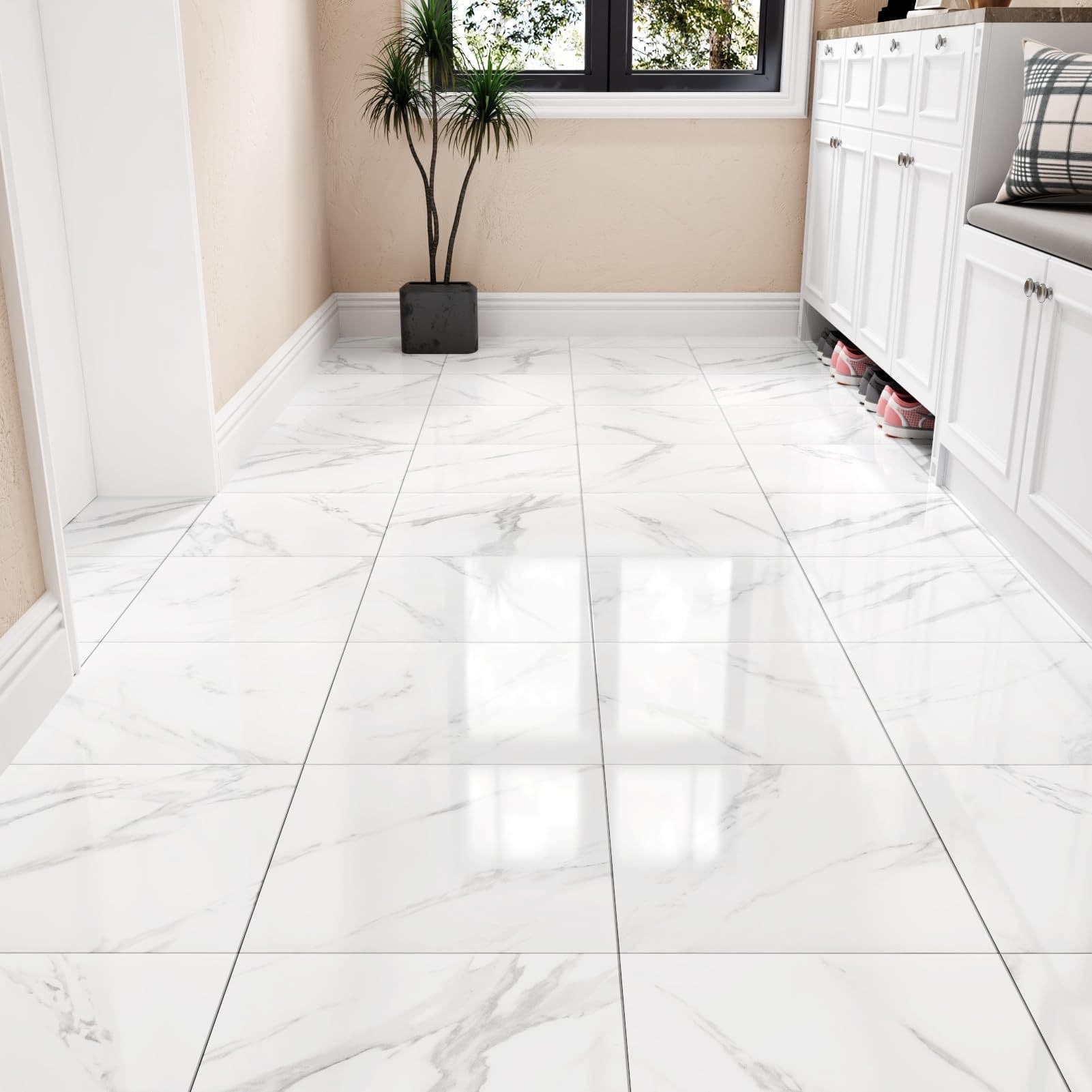
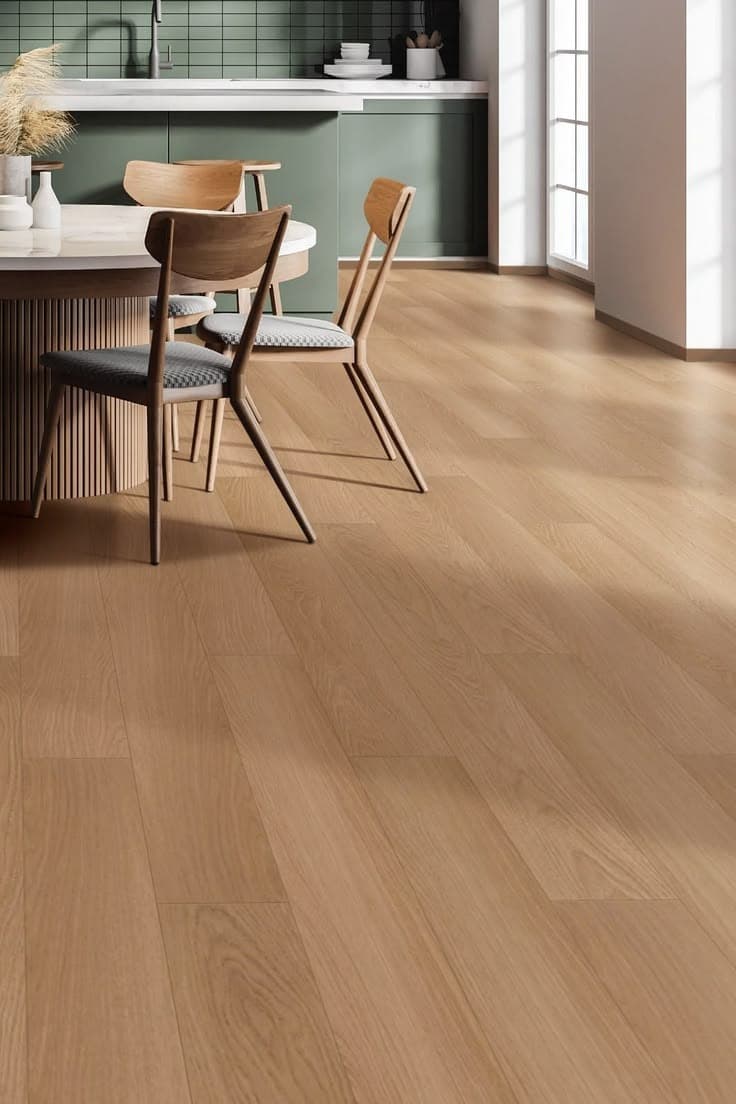
Tile size changes more than the number of grout joints. Large rectangles can create a quiet field across an open plan, but they also make substrate flatness, handling and cut planning more demanding. Smaller formats may respond more easily to compact rooms or complicated boundaries. Wood-look planks introduce direction and offset decisions, while stone-look porcelain may contain strong veining that needs blending. Open several cartons or review a representative display before approving a product. Shade-variation guidance is helpful, but the homeowner should still decide whether the actual range feels calm, lively or inconsistent in the proposed space.
Rectified edges can support controlled, visually crisp joints, yet they do not mean a floor should be installed without grout. Actual tile dimensions, edge condition, pattern and site conditions still guide the joint plan. Ask how the layout will address doorways, islands, cabinets and long views from the entrance. A beautiful tile can look awkward when a prominent wall ends in a narrow cut or random veins collide at the center of a room. Product selection is complete only when the format and variation can be organized into a practical, intentional layout.
05
Match the tile choice to the concrete slab
Many Sarasota homes place tile over a concrete slab, so the finish cannot be evaluated separately from its base. Existing flooring removal may reveal adhesive residue, patches, hollow areas, changes in elevation or cracks that were not visible during product shopping. The slab should be inspected for soundness, cleanliness and flatness appropriate to the selected format. Larger tile generally makes plane variation harder to accommodate during setting. If correction is necessary, it should be described as preparation rather than hidden inside an undefined installation allowance. Clips may help control neighboring edges, but they do not correct an unsuitable floor.
A crack also deserves diagnosis before it is covered. Some conditions may be addressed with a specified treatment, while movement that changes height across the crack raises a different concern. No membrane should be presented as a universal promise against future movement. Moisture indicators, previous floor failures and cutback or other residue can also affect the preparation approach. Share the chosen porcelain, its size and the proposed setting system with the installer before ordering. This lets material choice, substrate work, transition height and movement accommodation become one coordinated plan instead of separate decisions made after delivery.
06
Plan the floor room by room
A continuous product can connect a kitchen, great room and hallway, but each zone still deserves a use review. Kitchens experience dropped utensils, cooking residue and chair movement. Bathrooms add wet feet and frequent cleaning. Bedrooms may benefit from the cool, easy-care surface but feel different underfoot than carpet. Entries carry grit and rainwater, while laundry rooms combine appliances, vibration and access needs. The same porcelain can work across several areas when its characteristics fit the most demanding relevant condition. Where needs conflict, a coordinated second finish may be smarter than forcing visual continuity everywhere.
Interior and exterior locations should not be treated as interchangeable simply because a color is available in both. A covered lanai, pool approach or exposed outdoor floor introduces different surface, drainage and environmental requirements from an air-conditioned living room. Confirm the exact product version and intended location for every area rather than extending an interior selection by assumption. Within the house, map changes at shower entries, sliding doors, thresholds and rooms that remain untouched. The goal is a floor that looks connected while respecting the practical requirements at each boundary and exposure condition.
07
Compare samples under Sarasota light
Sarasota homes often have broad windows and strong daylight that moves across the floor. Low-angle light can emphasize sheen, surface texture, grout contrast and small changes in plane. A tile that appears warm beneath showroom lighting may read cooler beside the home’s cabinets, wall color and outdoor view. Borrow the largest available sample and place it flat, because a floor receives light differently than a vertical display. Review several pieces at different times of day and with the electric lighting used at night. Photographing the samples can help comparison, but the eye should make the final decision in the actual room.
Contrast also affects how often a floor appears to need cleaning. Very dark porcelain can show pale sand, while a uniform light surface can reveal dark hair or outdoor soil. Patterned stone looks and moderate tonal variation may disguise everyday debris, but variation should still coordinate with fixed finishes. Place grout samples between tile pieces instead of selecting grout from a separate chart. The joint can blend with the dominant tone, reinforce the pattern or create an unintended grid. Testing these relationships before purchase is a modest step that can prevent dissatisfaction across hundreds of visible square feet.
08
Order quantities, trim and reserve material together
Order planning should reflect the actual layout, not only measured floor area. Cuts, pattern, room geometry, breakage, tile variation and future availability all affect quantity. A straightforward square room may use material differently from connected spaces with angled walls, closets and numerous doorways. Vein direction or selective blending can increase the number of pieces needed to achieve the approved appearance. Confirm who calculates the order, who checks carton information at delivery and what happens if visible damage or unexpected variation is found. Do not schedule demolition around an unverified shipping estimate or incomplete delivery.
Include matching trim, profiles, grout and appropriate reserve tile in the plan. Production runs can change, and the same named color may not be a seamless match years later. Clearly labeled spare pieces give a future repair a better chance of blending with the existing floor. Store them flat or as directed, in a protected location where the product identity remains attached. Keep invoices, technical sheets, color names and batch information with household records. Reserve material is not waste when it supports a localized repair without forcing a broader flooring replacement.
09
Build a care plan before approving the floor
Porcelain is often selected for manageable upkeep, but the finished floor includes grout, flexible joints and transitions as well as tile. Ask for written cleaning guidance for every installed material. Routine dry removal of sand and grit helps limit abrasion, especially near exterior doors. Use compatible neutral products when recommended, avoid assuming that stronger chemicals clean better, and test any unfamiliar product in a discreet area. Textured finishes may need occasional agitation rather than repeated heavy chemical use. Mats should capture soil without trapping moisture or using backings that conflict with the surface.
Closeout should also identify what to watch over time. Flexible joints may require periodic inspection, grout can collect residue when cleaner is overused, and furniture feet can concentrate loads or scratch debris across the surface. Keep a few photographs of product labels and installed areas with the spare tile record. If damage occurs, determine whether it is surface residue, a chipped piece, movement or a condition beneath the floor before choosing a remedy. A realistic maintenance plan protects the selection better than a broad promise that any porcelain floor will take care of itself.
FAQ
Questions Sarasota homeowners ask
Is porcelain always better than ceramic tile for a Sarasota floor?
Not automatically. Porcelain can be a strong flooring choice, but suitability depends on the exact product, finish, room, substrate and maintenance goals. Some ceramic products are designed for appropriate residential floors. Compare current manufacturer information and the proposed application instead of treating the category name as the entire decision.
Can polished porcelain be used throughout the house?
It may suit some dry interior areas, but review traction, water exposure, glare, spotting and abrasion expectations before extending it everywhere. Bathrooms, entries and routes from a pool or lanai deserve particular attention. A coordinated matte version can sometimes preserve the visual palette where a different surface behavior is preferable.
Does wood-look porcelain need special layout planning?
Yes. Plank dimensions, possible bowing, offset, direction, room transitions and repeating printed faces affect the finished appearance. View multiple pieces, discuss the manufacturer’s layout guidance and map long sightlines before installation. A random-looking floor still benefits from a deliberate plan for joints, cuts and pattern distribution.
What grout color is easiest to maintain?
No color eliminates maintenance. Mid-range tones may disguise everyday soil better than very light or very dark joints, but product type, joint width, installation, cure and cleaning habits matter too. Test actual grout samples between several tiles, then follow the grout manufacturer’s care guidance after the floor is complete.
How much spare porcelain tile should I keep?
The useful reserve depends on tile size, pattern, room geometry and how difficult a future match may be. Ask the installer to recommend attic stock after the final layout and quantity are known. Keep full undamaged pieces, labels and batch information protected; do not assume the same product will remain available indefinitely.